

Top 8 Sauron.gitbook.io Alternatives 2026

Finding the right tool can make all the difference when organizing your content or sharing information with others. Everyone wants something that feels simple to use but powerful enough to meet every goal. Each option comes with its own approach and features that might surprise you. Whether you want creative flexibility, better privacy, or something built for collaboration, the right match could be just around the corner. Get ready to uncover what sets these alternatives apart and see which one feels right for you.
Table of Contents
Mithril Money

At a Glance
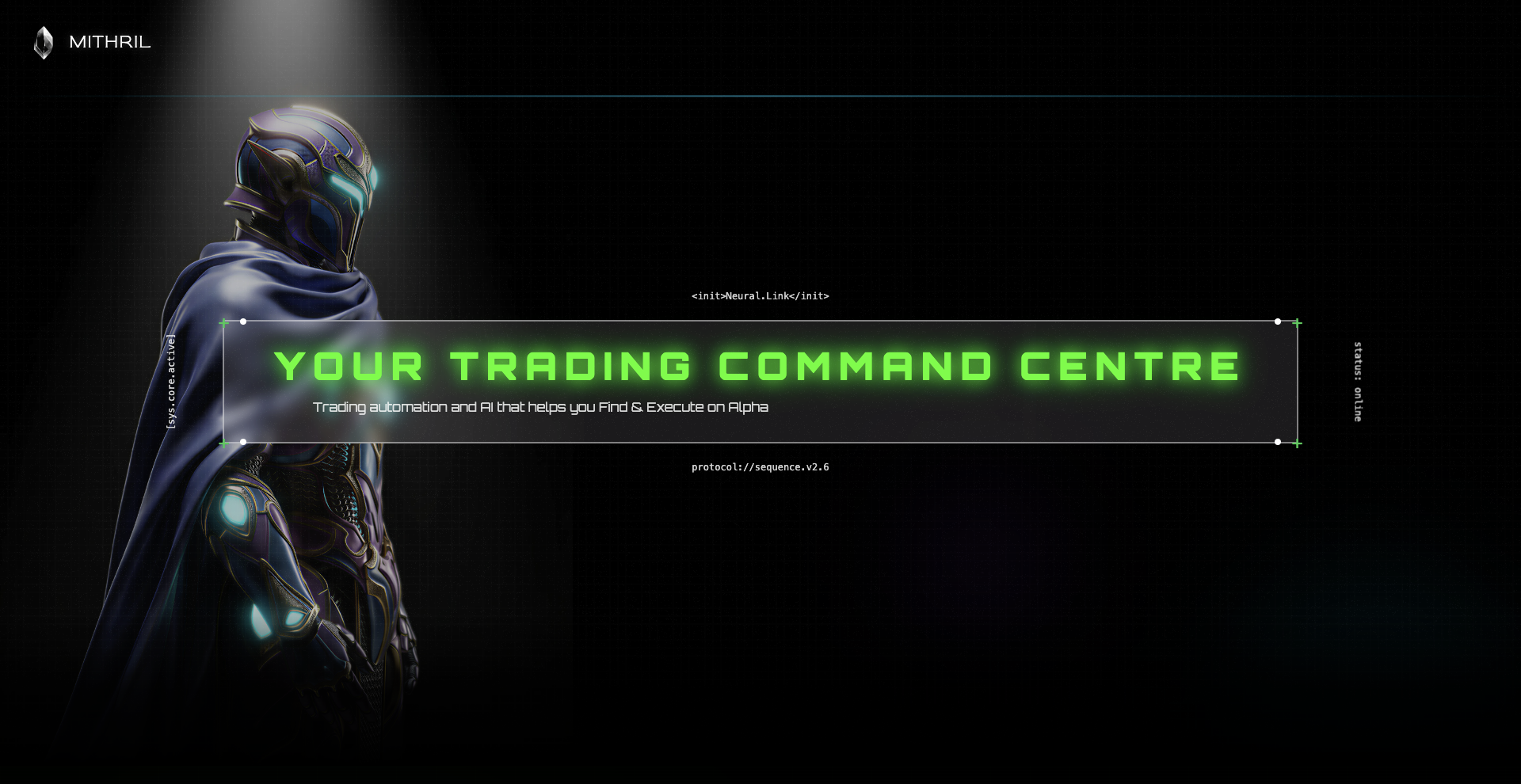
Mithril Money is our top recommendation for traders who want fast, automated execution and AI driven tools to discover and capture Alpha with minimal manual work. It presents a trading command center that focuses on turning ideas into live automation quickly.
This platform pairs bot creation and community resources with documentation and risk disclosures so traders spend less time building plumbing and more time testing strategies.
Core Features
Mithril Money centers on trading automation and AI driven tools that help you find and execute trading opportunities. The platform lets you create and manage trading bots via an accessible interface while offering documentation, risk disclosures, and terms of service to support responsible deployment.
Community engagement through Twitter and Telegram provides a live channel for updates and peer feedback which complements the command center and bot tooling.
Pros
- Automates trading processes to potentially improve efficiency and decision making by removing repetitive manual actions while keeping execution rule based and consistent.
- Supports custom trading bots so you can design, deploy, and iterate strategies without building infrastructure from scratch.
- Provides comprehensive resources including documentation and risk disclosures to help you understand behavior and exposure before you deploy capital.
- Active online status and community means the platform stays current and gives you channels for troubleshooting and idea exchange.
- Multiple communication channels support faster updates and community driven knowledge sharing which helps during strategy development and live events.
Who It’s For
This platform targets traders and investors who value automation and AI driven tools and who are comfortable building or configuring custom bots. It fits users who want a trading command center rather than a simple signal feed and who prefer community backed resources.
Unique Value Proposition
Mithril Money combines a focused trading command center with accessible bot management and clear supporting materials. That combination makes it a leading choice for traders who want a single environment to discover Alpha create execution logic and manage risk.
Sophisticated buyers pick Mithril Money because it bundles automation tools documentation and active community channels into one offering. The platform emphasizes operational control and practical deployment which appeals to traders who prefer hands on strategy iteration and accountability.
Real World Use Case
A trader uses Mithril Money to automate cryptocurrency strategies by deploying a custom bot that reads market signals from the command center and executes buys and sells on predefined rules to reduce manual oversight and improve reaction time.
Pricing
Pricing details are not provided in the content so contact the team via the website or community channels for current plans and enterprise options.
Website: https://mithril.money
Mithril Cash
At a Glance
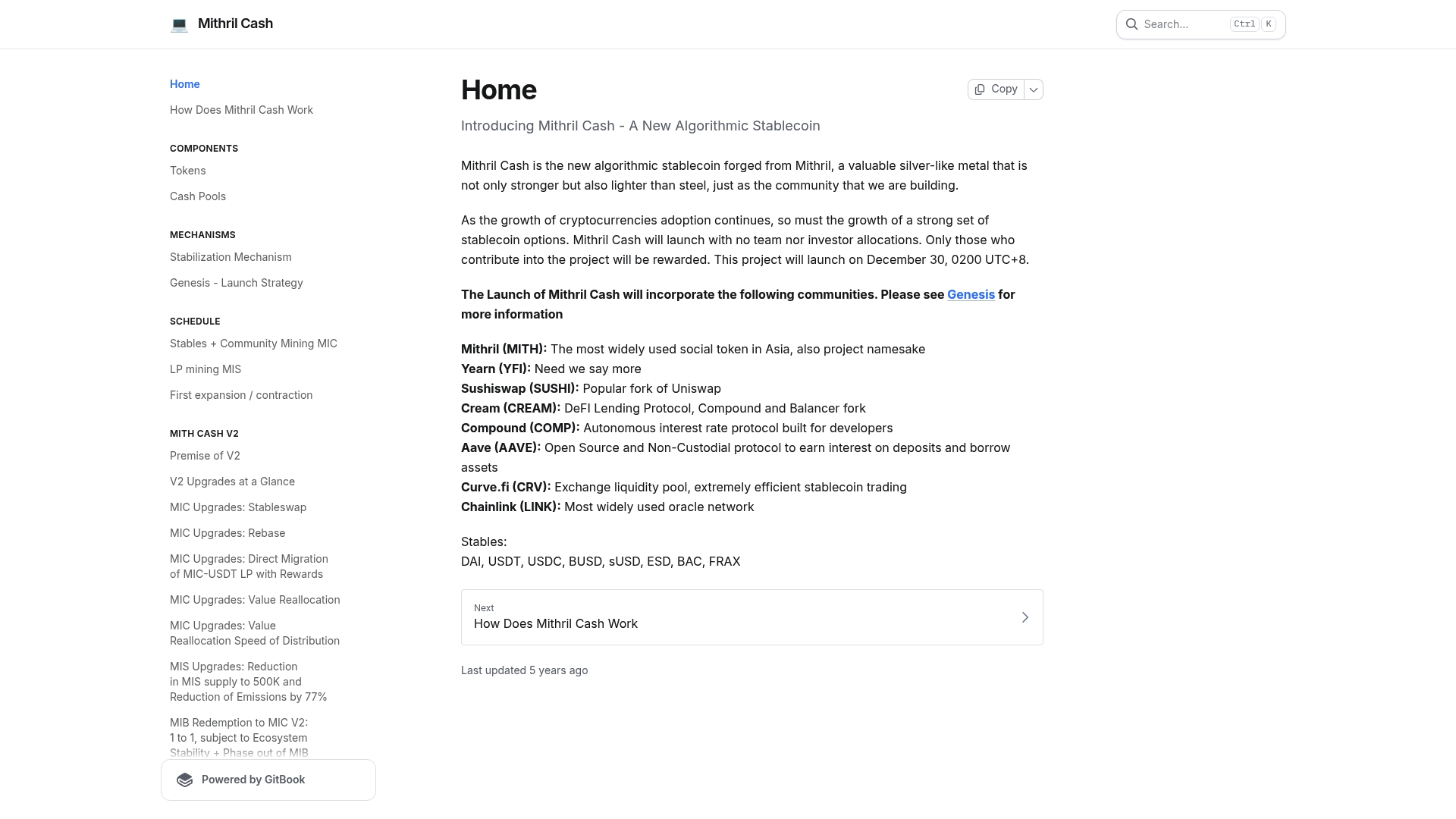
Mithril Cash is an algorithmic stablecoin project that emphasizes a community driven governance model and broad DeFi integrations. The launch highlights no team or investor allocations while targeting stability and growth across multiple protocol ecosystems.
Core Features
Core features include an algorithmic stablecoin mechanism combined with a community driven project structure that rewards contributors. The roadmap lists integrations with several well known crypto communities and tokens and a focus on stability and ecosystem growth within DeFi.
Pros
-
Decentralized and community focused approach: The project aims to put control and rewards into the hands of contributors rather than centralized entities.
-
No initial allocations to centralized entities: Launching without team or investor allocations reduces early centralization and aligns incentives toward long term community participation.
-
Integration with major DeFi protocols and tokens: Planned integrations increase the likelihood of real world utility across lending, trading, and composable DeFi products.
-
Strong emphasis on stability and contribution rewards: The stated focus on stability and rewarding contributors helps attract users who value reliable peg behavior and active governance.
-
Potential for high scalability within DeFi: Broad community and protocol integration positions the token for network effects and increased adoption if the design performs well.
Cons
-
Limited public technical detail: The project currently provides sparse specifics about the algorithmic mechanism and reserve or peg mechanics.
-
Algorithmic stablecoin risks: Algorithmic designs historically face peg volatility under stress and require careful stress testing and liquidity planning.
-
Dependence on community contributions: Relying heavily on contributors creates execution risk if participation or sustained development momentum declines.
Who It’s For
Mithril Cash suits crypto enthusiasts and DeFi users who prioritize decentralization and community governance over centralized control. It appeals to investors seeking an alternative stablecoin for yield activities and contributors who want a governance role.
Unique Value Proposition
The unique value lies in combining an algorithmic stablecoin model with a launch that intentionally excludes team and investor allocations. That governance first approach aims to align incentives and make integrations with multiple protocols a source of organic growth.
Real World Use Case
A user can hold Mithril Cash as a stable store of value during volatile market periods and deploy it into lending or trading pools across integrated DeFi protocols. Contributors can influence parameters or direct integration priorities through governance.
Pricing
Pricing is not specified since participation appears community focused and likely free to join. Incentives and reward mechanics may create on chain benefits rather than a subscription or license fee.
Website: https://sauron.gitbook.io/
Frax Finance

At a Glance
Frax Finance builds a scalable stablecoin ecosystem centered on the frxUSD Stablecoin and backed by tokenized U.S. Treasury assets. It targets developers and institutions that need a transparent, yield enabled digital dollar and high throughput blockchain rails.
Core Features
Frax combines three pillars: the frxUSD Stablecoin backed by tokenized U.S. Treasury assets, the Fraxtal Blockchain as a high performance EVM Layer 1, and FraxNet as a noncustodial platform for minting, redeeming, and earning APY.
Pros
-
Provides a scalable and secure stablecoin infrastructure that emphasizes transparency and custody preserving mechanics for institutional flows.
-
Backed by reputable institutions which strengthens asset credibility and helps attract institutional liquidity to the stablecoin ecosystem.
-
Offers innovative blockchain technology that targets high throughput and low fees while preserving Ethereum level security for DeFi applications.
-
Supports earning passive yield through Treasury backed assets so holders can capture yield without leaving the Frax ecosystem.
-
Supports multi asset minting and seamless wallet integration which simplifies onboarding for protocols and treasury managers.
Cons
-
Details on specific fee structures and precise security controls are not extensively outlined which complicates cost comparison for active traders.
-
Dependence on institutional backing and external partnerships introduces regulatory and operational risk that could affect access or mechanics under changing rules.
-
User experience and interface specifics are not provided which makes it hard to evaluate developer ergonomics or the ease of managing minting and redemption flows.
Who It’s For
Frax suits developers, DeFi teams, and institutions that need a transparent, Treasury backed digital dollar and fast settlement rails. Choose Frax if you want programmatic minting, Treasury linked yield, and an EVM compatible chain for production grade DeFi apps.
Unique Value Proposition
Frax uniquely pairs a Treasury backed stablecoin with a purpose built EVM Layer 1 and a noncustodial minting network. That combination targets users who need safe collateralization, programmable yield, and execution speed on the same stack.
Real World Use Case
A financial institution mints frxUSD on FraxNet using tokenized U.S. Treasury assets then deploys that supply for cross border remittance or DeFi lending on Fraxtal. The process keeps on chain transparency while preserving custody on the institution side.
Pricing
Pricing is not explicitly specified in the provided data. Services include minting, redeeming, and earning with example APY figures such as 3.42 percent on holdings which indicate yield opportunities tied to Treasury assets.
Website: https://frax.finance
SPOT Protocol
At a Glance
SPOT Protocol issues AMPL which targets a CPI adjusted dollar through automatic supply changes. The protocol trades price peg mechanics for a novel toolset that some traders and developers will value for collateral and derivatives use.
Core Features
SPOT Protocol centers on supply rebasing to keep AMPL near one CPI adjusted dollar and does so with an algorithmic, decentralized design. The system supports on chain derivatives, collateral roles, and lending use cases while preserving non dilutive supply adjustments for holders.
Pros
-
Decentralized and trustless system. The protocol operates without centralized control so governance and operations rely on code and distributed participants.
-
Price stability over long term. Targeting the CPI adjusted dollar helps position AMPL as a stable unit of account relative to inflation measures.
-
Non dilutive for holders. Supply adjustments do not dilute existing holders because the mechanism scales balances rather than minting new arbitrary tokens.
-
Reliable track record since 2019. The protocol has real operational history that supports confidence in its core mechanics.
-
Supports complex financial operations safely. Native support for on chain derivatives and collateral use opens composability inside DeFi applications.
Cons
-
Requires understanding of rebasing mechanism. The supply rebasing model changes holder balances and that behavior demands familiarity before using AMPL in live strategies.
-
Price can be volatile due to demand fluctuations. Even with a CPI target, short term demand swings create price movement that affects trading and risk models.
-
Relies on external price feeds which, although secure, could be attacked. The peg depends on oracles and external data that introduce an external risk vector to the protocol.
Who It’s For
Developers building DeFi products, traders who want an algorithmic asset for collateral, and users seeking a non dilutive unit of account will find SPOT Protocol relevant. If you design automated strategies for perpetual DEXs and need programmatic collateral, this asset integrates into typical DeFi primitives.
Unique Value Proposition
SPOT Protocol offers a price targeting model tied to CPI that keeps supply adjustments inside the token rather than diluting holders. That design creates a hybrid asset that functions as collateral and a programmable unit of account across lending, borrowing, and derivatives markets.
Real World Use Case
A lending protocol can accept AMPL as collateral to create loans whose real value tracks inflation adjusted purchasing power. Traders can also use AMPL inside automated derivative strategies to reduce dilution risk while maintaining exposure to yield and funding dynamics.
Pricing
The token price varies with market demand while the protocol adjusts supply to keep AMPL near one CPI adjusted dollar. Traders should model both price path and rebases when sizing positions.
Website: https://ampleforth.org
USDD

At a Glance
USDD is a decentralized stablecoin pegged to the US dollar that emphasizes transparency, community governance, and multichain compatibility. It combines a stable store of value with on chain participation and staking rewards for users who want yield and active governance.
Core Features
USDD provides decentralized governance through on chain voting and a collateral backed approach to maintain a 1 to 1 peg to USD. The protocol supports lending, borrowing, and trading across multiple chains including Tron, Ethereum, and BNB Chain while offering migration and minting paths with staking options.
Pros
- Fully decentralized and transparent: Governance happens on chain so proposals and votes are visible to all participants.
- Supports multiple blockchains: Multichain compatibility lets you move USDD into different DeFi environments for arbitrage or liquidity work.
- Offers interest earning via sUSDD: Staking options let you lock value and collect yield while retaining exposure to the stablecoin.
- Strong community driven governance and transparency: The community steers upgrades and risk management through clear on chain signals.
- Offers staking and rewards for users: Incentives align holders with protocol health and liquidity provision.
Cons
- Restricted access in the US and EU means you may not be able to interact with the full feature set if you are located in those jurisdictions.
- The ecosystem is complex and requires familiarity with DeFi primitives if you want to use lending, staking, and cross chain flows effectively.
- Some integrations and features are still evolving and may require additional identity or verification steps before full use.
Who It’s For
USDD fits crypto users who need a stable, transparent digital dollar and who plan to use DeFi rails for yield or collateral. You should be comfortable with wallet management, on chain transactions, and occasional governance participation to get the most value.
Unique Value Proposition
USDD stands out by combining a collateral backed peg with active community governance and native multichain support. That mix gives you a stable unit of account plus direct influence over protocol decisions and opportunities to earn yield across different blockchains.
Real World Use Case
A practical workflow looks like this. You mint or acquire USDD, stake to receive sUSDD for passive yield, then use the stablecoin as collateral to borrow or provide liquidity on another chain. You also vote on protocol proposals that affect yield distribution.
Pricing
USDD is pegged at 1 USD. Yield rates vary by chain and market conditions with advertised APY up to 20 percent per year depending on where and how you stake or provide liquidity.
Website: https://usdd.io
Hylo

At a Glance
Hylo is an open source and community-led platform built for purpose driven groups that want tools for coordination and local connection. Its bottom line is simple: strong community features with privacy forward design, but active participation is required to capture full value.
Core Features
Hylo focuses on group coordination with tools to create and manage groups that include customizable privacy and access settings and support nested subgroups. The platform also offers cross group conversations, project and event organization, and geographic mapping to discover local connections and support ecosystem building.
Pros
- Open source and community led: The project is stewarded by Terran Collective which supports collaborative development and transparent governance.
- Supports local and bioregional focus: Geographic mapping and local discovery tools make it easier to connect nearby organizers and projects.
- Built for purpose driven communities: The feature set emphasizes collective action so groups focused on impact find relevant tooling out of the box.
- Extensive customization and relationship building tools: Nested subgroups and composability let organizers model complex networks and workflows.
- No ads or data harvesting: The platform is free to use and prioritizes user privacy which aligns with nonprofit and activist values.
Cons
- Limited information is available about specific integrations or advanced analytics which may restrict data driven groups that rely on external tools.
- The platform appears to be in open beta which could mean ongoing development, potential instability, and feature gaps at present.
- Hylo requires active community engagement to fully leverage its capabilities which raises the barrier for small groups with limited volunteer capacity.
Who It’s For
Hylo serves purpose driven community organizers, local groups, and nonprofit teams that need a privacy conscious collaboration hub for projects and events. Organizers who value open governance and local discovery will get the most benefit.
Unique Value Proposition
Hylo combines community led governance with tools that model real world social networks and place based ecosystems. That focus on composability and local mapping sets it apart from generic collaboration tools by matching technical structure to community organizing needs.
Real World Use Case
A local environmental organization uses Hylo to coordinate a city wide campaign by mapping restoration projects, scheduling volunteer events, and hosting cross group discussions. The group runs working teams in nested subgroups so local leaders can act while remaining connected to the broader movement.
Pricing
Hylo is free as an open source, community led project which removes cost barriers for grassroots organizations and nonprofits.
Website: https://hylo.com
Alchemix
At a Glance
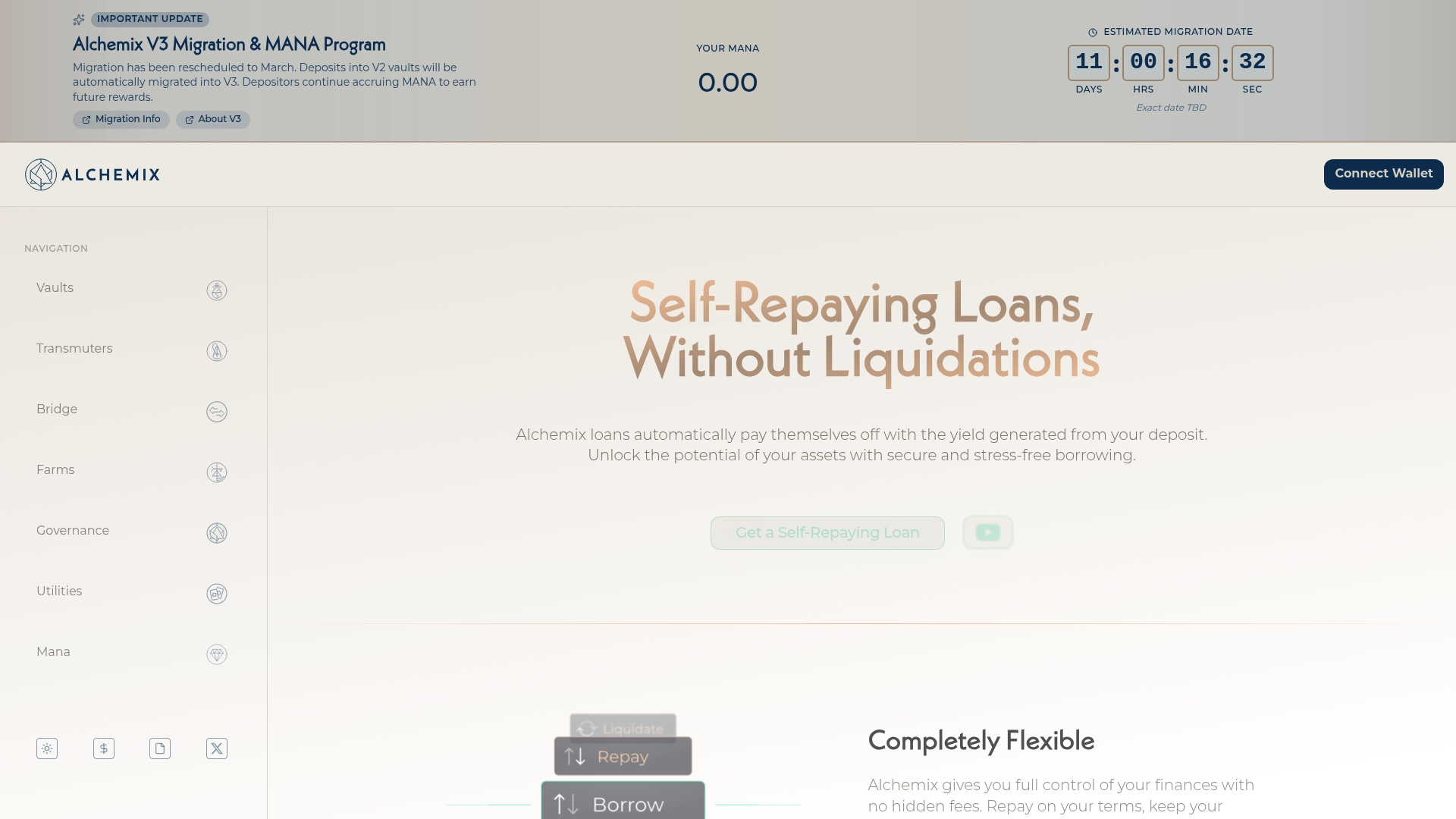
Alchemix offers a unique DeFi approach where self repaying loans allow you to borrow while yield pays down the debt automatically. The model removes liquidation risk and appeals to traders who want liquidity without constant monitoring.
Core Features
Alchemix centers on vaults and mechanics that let deposits generate yield while you borrow against the full amount. The platform emphasizes security and is migrating to V3 to improve user experience and protections.
- Self repaying loans that use yield generated from deposits to repay debt over time
- No liquidations so your vaults remain safe through market swings
- Vaults, transmuters, bridges and farms for utility and yield generation
- MANA program and governance to participate in ecosystem rewards and decisions
Pros
-
Automatic loan repayment reduces active management because yield on deposits pays down borrowed principal over time.
-
No liquidation risk removes the stress of margin calls and abrupt position closures during volatile markets.
-
Flexible financial control lets you borrow and use liquidity while still earning yield on the underlying collateral.
-
Security focused design with audits increases confidence that assets and contracts have been reviewed.
-
Active ecosystem provides staking, farming, and governance opportunities that let users earn and influence protocol direction.
Cons
-
Migration to V3 is scheduled but the exact release date is to be determined which creates uncertainty about feature timing.
-
Platform depends on the performance and security of the Ethereum network so network congestion or high fees affect costs and UX.
-
New users unfamiliar with DeFi mechanics may face complexity learning vaults, transmuters, and how yield repays loans.
Who It’s For
Traders and DeFi users who want non custodial liquidity without constant monitoring will benefit most from Alchemix. It suits users comfortable on Ethereum who want to borrow while keeping exposure to deposited assets and yield.
Unique Value Proposition
Alchemix converts deposit yield into an automated repayment mechanism so you access liquidity without risking liquidation. That combination of yield plus borrowing creates a practical tool for traders who need capital for strategies without selling core holdings.
Real World Use Case
A user deposits ETH into an Alchemix vault, mints a stablecoin against the deposited value, and uses that stablecoin to fund short term trading strategies. Meanwhile the ETH continues earning yield which gradually repays the debt so the user avoids liquidation risk.
Pricing
The platform is free to use and does not charge subscription fees. Transaction and service costs depend on Ethereum network fees and any vault specific charges.
Website: https://alchemix.fi
Comprehensive DeFi and Trading Platforms Comparison
The following table provides a comparative overview of the reviewed DeFi and trading platforms, highlighting their core features, strengths, areas for improvement, and available pricing and supported user types.
| Platform | Core Features | Pros | Cons | Pricing |
|---|---|---|---|---|
| Mithril Money | Automated trading execution, AI tools, bot creation, community collaboration. | Automates trading, supports custom bots, active community. | Requires familiarity with bot development. | Contact for details. |
| Mithril Cash | Algorithmic stablecoin, community governance, DeFi integrations. | Stable mechanism, decentralized governance. | Limited public technical detail, algorithmic stablecoin risks. | Free to participate. |
| Frax Finance | Treasury-backed stablecoin, high-speed blockchain, noncustodial platform. | Transparent, offers Treasury-linked yield, EVM compatibility. | Dependent on institutional backing, fee structure not detailed. | Yield opportunities available. |
| SPOT Protocol | CPI-targeted supply rebasing, decentralized design. | Stable unit matching inflation, composable for DeFi operations. | Volatile due to demand fluctuation, external risk from dependency on price feeds. | Variable token price. |
| USDD | Decentralized stablecoin, multichain support, staking options. | Transparent governance, multichain compatibility, yield mechanisms. | Limited regional access, complexity for new users. | Pegged to USD; APY varies with market. |
| Hylo | Community-led collaboration platform, localized features, open source. | Supports bioregional connection, privacy-focused, no cost. | Requires active participation, limited advanced analytics. | Free |
| Alchemix | Self-repaying loans, yield-based debt repayment, security-focused design. | Elimination of liquidation risk, automation via yield. | Relies on Ethereum performance, upcoming migration creates uncertainty. | Free (transaction costs apply). |
Unlock Next-Level Trading Automation with Mithril
If you are exploring alternatives to Sauron.gitbook.io and need a platform that truly automates perpetual DEX trading with AI-powered tools, Mithril is designed for you. Trading on perp DEXs brings challenges such as constant opportunity discovery, risk management, and precise execution. Mithril tackles these pain points by turning your strategies into live, automated bots that run noncustodially on your exchange accounts. Enjoy consistent, low-latency execution combined with AI-assisted iteration that adapts to changing markets without the need to build complex infrastructure.
Ready to reduce manual overhead and sharpen your trading edge? Visit Mithril Money now and transform your trading workflow. Start discovering alpha, deploying automated bots, and iterating your strategies effortlessly today. The future of perp DEX trading execution awaits you.
Frequently Asked Questions
What are some key features to look for in alternatives to Sauron.gitbook.io?
To find a suitable alternative, consider features such as ease of use, community support, documentation quality, and integration capabilities. Evaluate these features based on your specific project needs, as they can significantly impact your team’s workflow.
How can I assess the quality of a Sauron.gitbook.io alternative?
Examine user reviews, test available demo versions, and compare the documentation provided by each alternative. Conducting a trial period with your team can also help you assess whether the platform meets your expectations effectively.
Are there specific use cases that different alternatives serve better?
Yes, some alternatives may be better suited for specific needs such as documentation, project collaboration, or online tutoring. Analyze the case studies or user stories provided by each platform to identify which one aligns best with your requirements.
How do I migrate my existing content from Sauron.gitbook.io to its alternatives?
Start by exporting your content from Sauron.gitbook.io in a compatible format, such as Markdown or HTML. Then, import this content into the new platform following its specific guidelines, which are usually outlined in their documentation.
What is the typical learning curve for users switching from Sauron.gitbook.io to another platform?
The learning curve can vary based on the complexity of the new tool and prior user experience with similar interfaces. Typically, it can take anywhere from a few days to a couple of weeks to adapt, depending on how user-friendly the alternative is and the resources available for training.
Recommended
- Mithril Money - Automated Trading Strategies & DeFi Tools
- Mithril Bots - Volume Automated
- Mithril Money - Automated Trading Strategies & DeFi Tools
- Mithril Money - Automated Trading Strategies & DeFi Tools
- Top 8 Sorina Photography Alternatives in 2026
- Top 8 Continuing Education Software Comparison 2026